

Halifax: A Model for Small Cities

While in Halifax, there was never a moment when I felt I could not get by without walking. Even in its suburban-feeling North End, groceries, cafés, and buses were just a short walk away. Small cities are great places to build neighborhoods that have an almost urban-town center feel.
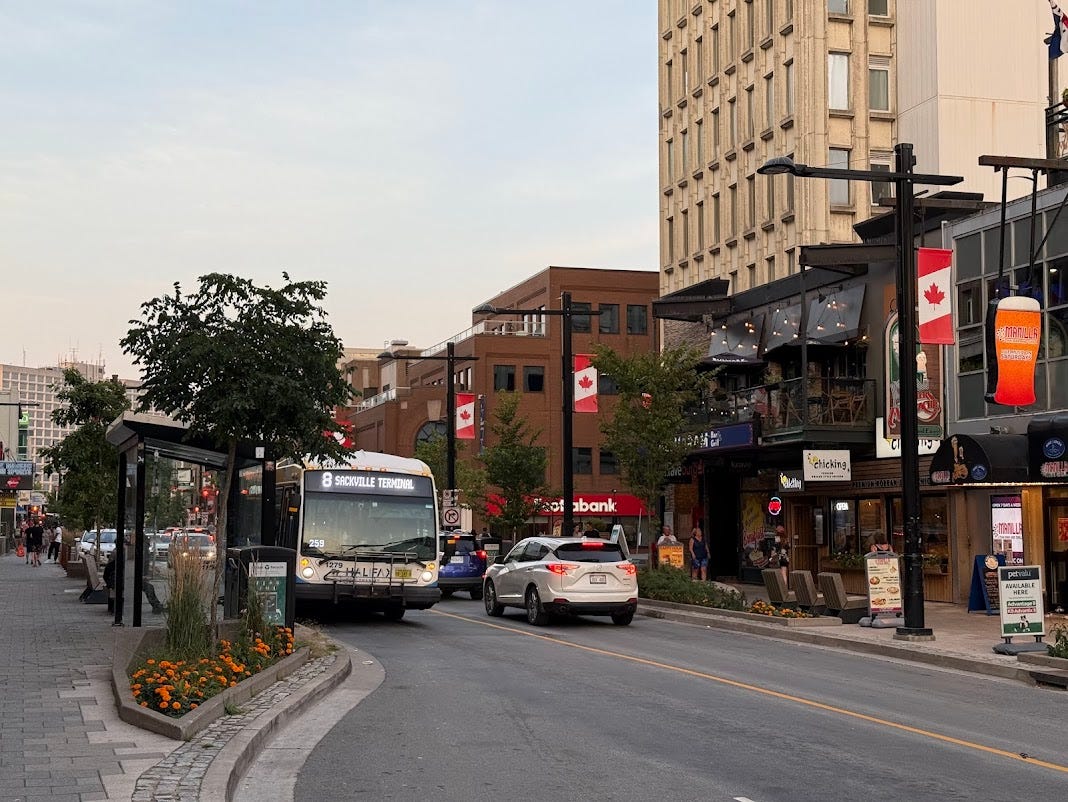
While in Halifax, I stayed in an Airbnb in the North End, not far from Africville (the northern tip of the peninsula), meaning that I was in a relatively suburban area. However, even in this relatively suburban part of the North End, I was greeted by convenience and walkability. Groceries, cafes, and everything I needed were within walking distance. At most, I would walk a few blocks for errands or to catch the bus to the city. I could ride the less frequent express bus from steps away or the more frequent bus a few blocks away.
The 7A/7B runs a loop around Halifax Peninsula, connecting the North End with downtown and other neighborhoods on the peninsula, as well as both universities. While running with a loop presents some issues, Halifax was able to use the 7A/7B to allow travel in both directions. The 7A/7B’s route even features bus lanes at some points. Additionally, the route seems to balance headways at one point Downtown and one in the North End to ensure you never have to wait too long for a bus.
In addition to the buses running across the municipality, ferries connect the Halifax Waterfront to two places in Dartmouth across the bay. While many larger coastal and river cities like Boston, New York, and London use ferries, not many small cities use ferries in the same way. In Halifax, ferries primarily serve commuters. As there are only two bridges crossing the bay, it can be faster for those living near the ferry terminal to take the ferry than to drive, especially considering that the bridges seemed to be very congested at any time when I was in the city.
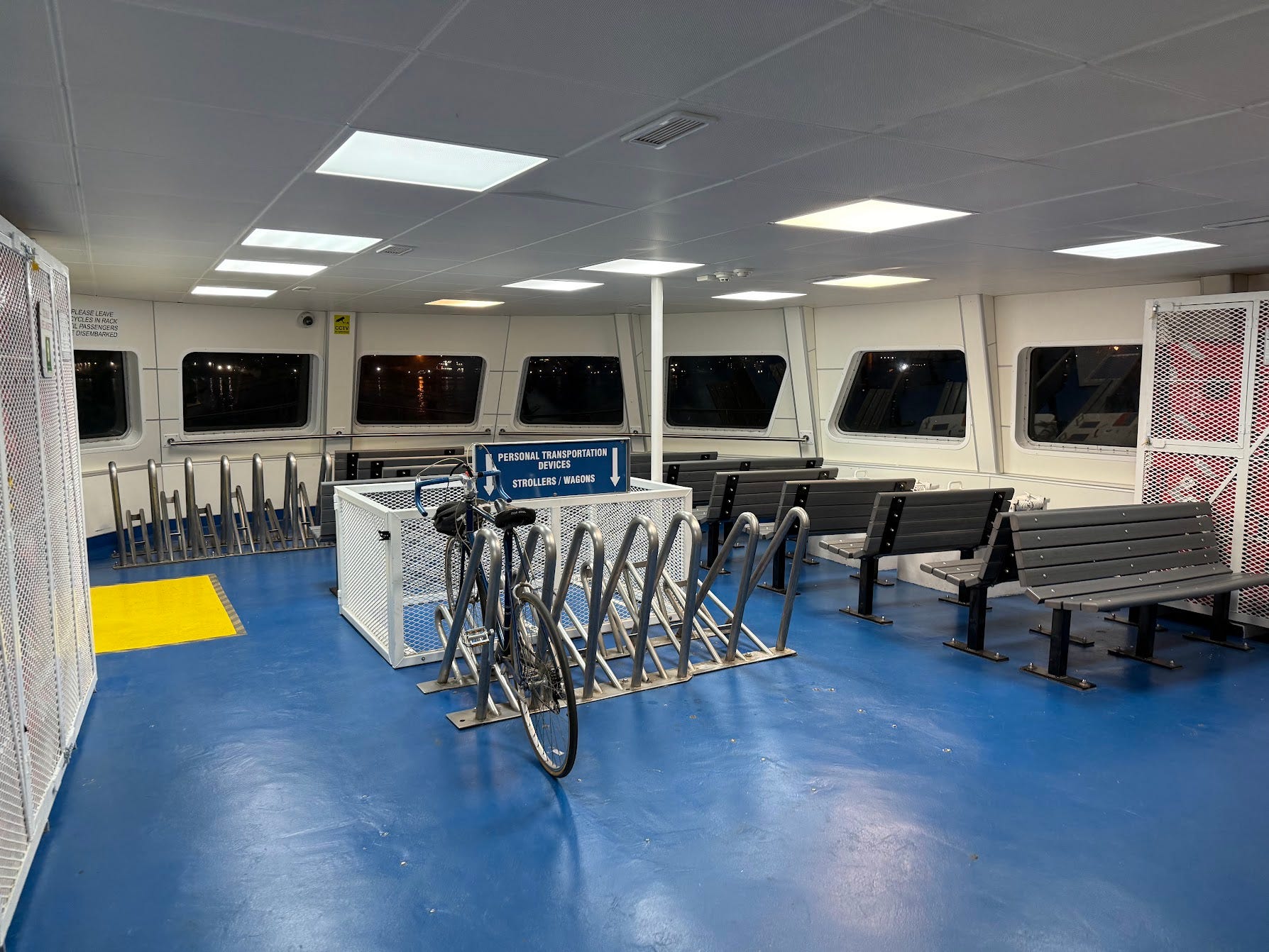
The interior of the ferry even featured numerous bike racks. Given that even at 10:30 p.m. someone parked their bike, it must be much busier at times.
Halifax is very centered around the downtown core; however, walking through the North End revealed a neighborhood connected with local businesses. My favorite neighborhood within the North End was Hydrostone. Not only is the neighborhood beautiful, featuring medians allowing residents to live in community with nature (read the last article) and gorgeous architecture, but it also has a neighborhood commercial district on Young Street. It serves as a gathering spot, filled with restaurants and small shops that light up the street and reinforce the community. I went to Lucy’s Hydrostone Café, which is a small but mighty bustling café, where the North End community gathers. The street light poles around Young St., and across the city, were scattered with posters and flyers of local community events, showing just how vital this small commercial district is to the North End.
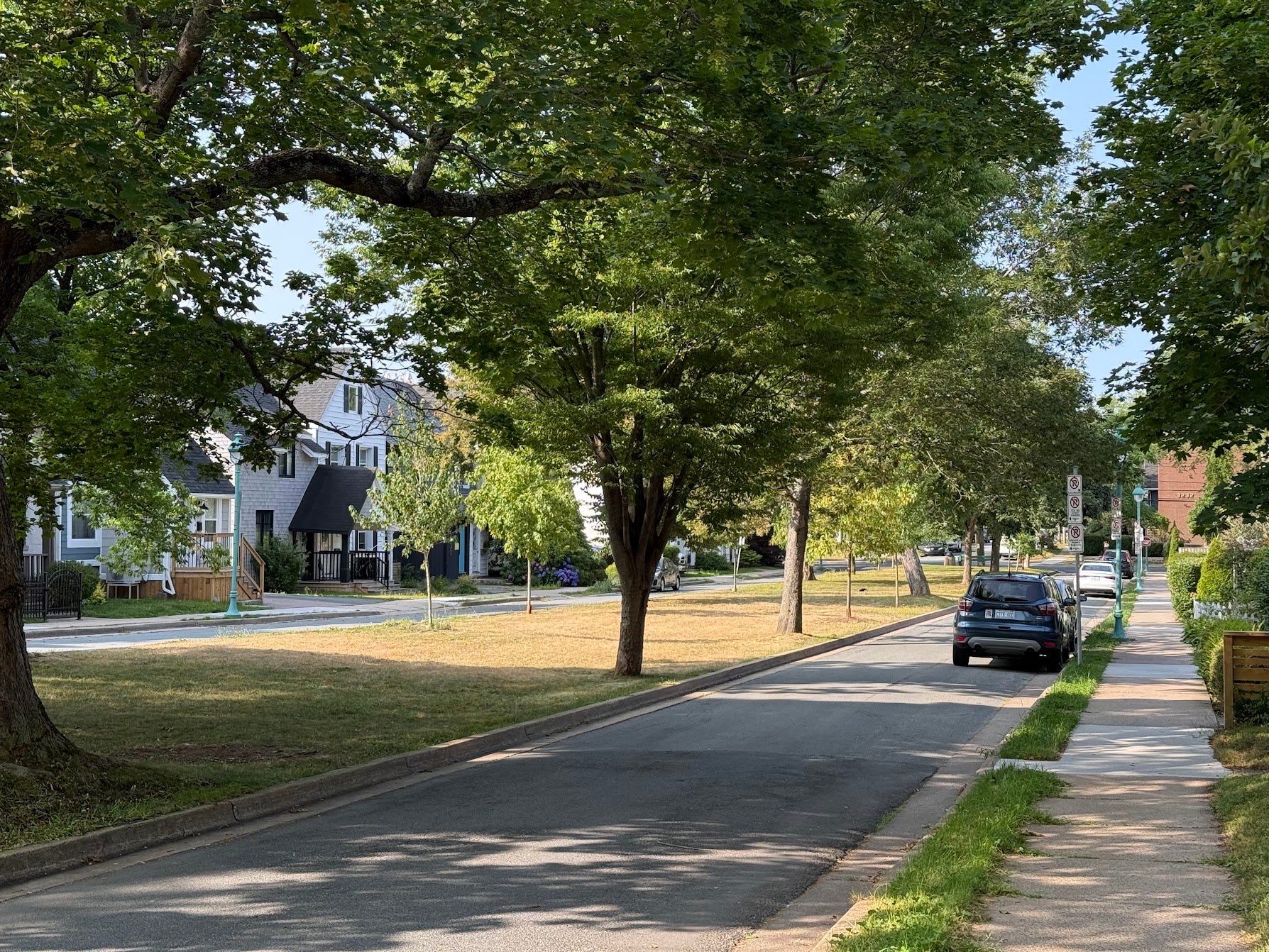
Hydrostone is bordered in the northeast by Novalea Drive (which continues to become Gottingen Street), where the 7A/7B runs, and it is surrounded by one-off local businesses in otherwise residential areas. This allows residents easy access to shops, cafes, markets, and restaurants. In many parts of the U.S. and Canada, new development has forced small-scale retail through zoning practices and perceived economic incentives through a lens of car-centrism. One business like this that I had planned on going to is called Sweet & Sassy, an authentic Caribbean/Fusions breakfast place.
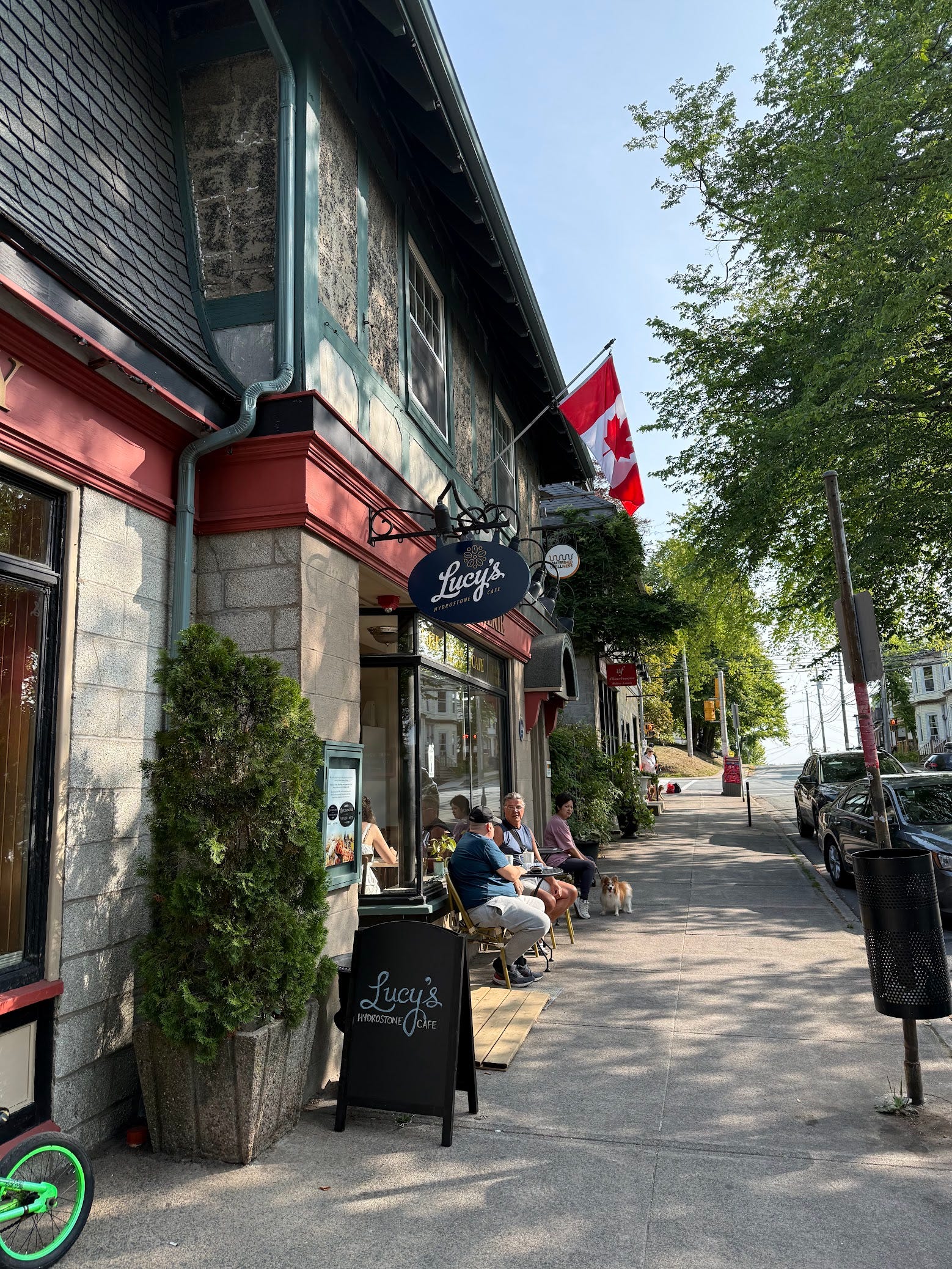
In my neighborhood of Squirrel Hill in Pittsburgh, there are a few of these important businesses, including my personal favorite, Pigeon Bagels. No matter where you go across Pittsburgh, Pigeon serves as an anchor to this micro-neighborhood within Squirrel Hill. These businesses do not even have to be known across the city. McKennas Diner in Savin Hill, Dorchester, Boston, serves as a similar anchor to connect the neighborhood. These shops serve as local landmarks and are integral to our neighborhood’s thriving.
In my time in the city, I kept concluding that the urban development in Halifax is a better outcome of many of the American cities that I have lived in and visited. For example, architecture in the South End reminded me a lot of the Oakland neighborhood of Pittsburgh, but felt much safer and less run-down. Hilly urban parts of Downtown felt a lot like Providence, RI, but livelier. Agricola St’s local business in the North End felt like parts of Portland, ME, but more active. The waterfront’s business-lined boardwalks reminded me of Old Town Alexandria, but more extensive, cultured, and diverse.
Neighborhoods in small and midsize cities like the ones mentioned above have the voice to push for more investment and zoning reforms to build more people-centric infrastructure, like I saw in Halifax.
This isn’t to say that Halifax does not suffer from many of the same issues tied to car-centricity as many other American and Canadian cities; there are tons of surface-level parking lots, a lack of access anywhere outside the city for non-drivers, and cyclists functionally being second-class citizens on the roads. However, Halifax is working through these issues.
Photo Spotlights:
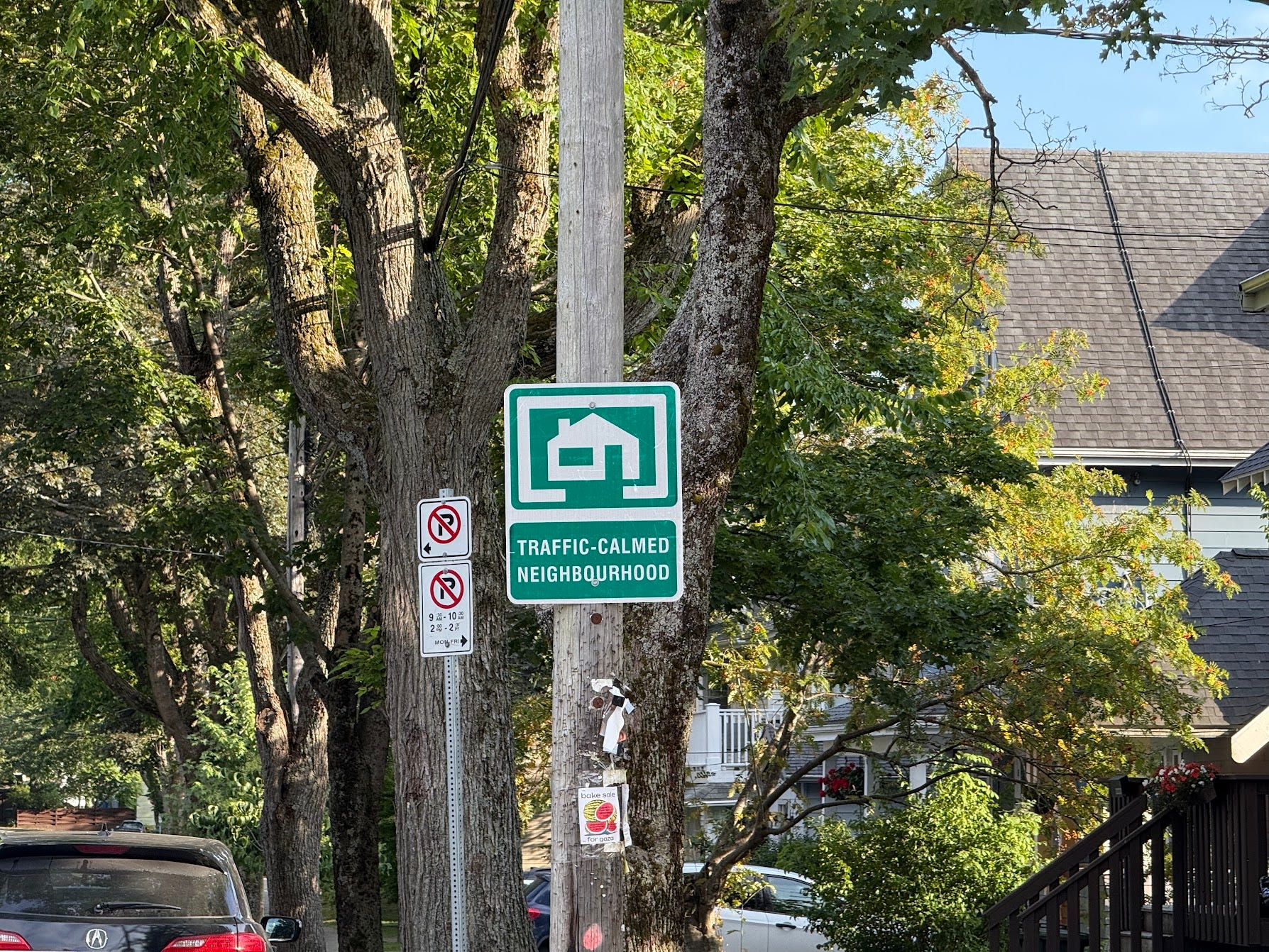
I saw a sign that specifically denoted this neighborhood was designed to be traffic-calmed, one of my most frequently used buzzwords.
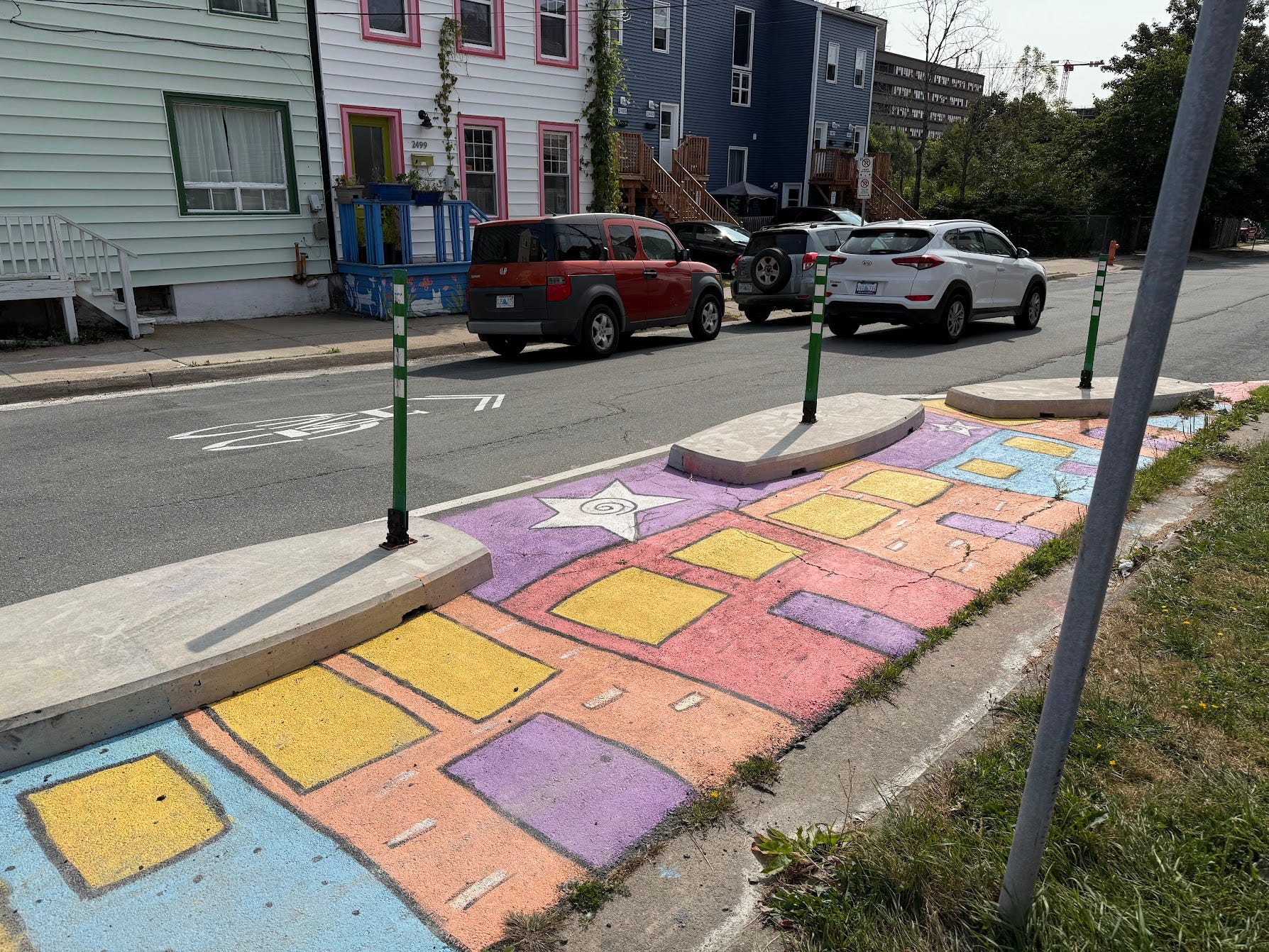
It was lovely to see this street art used in conjunction with concrete and flex posts to make this intersection safer by reducing crossing distance and narrowing the street, at little cost to the city.
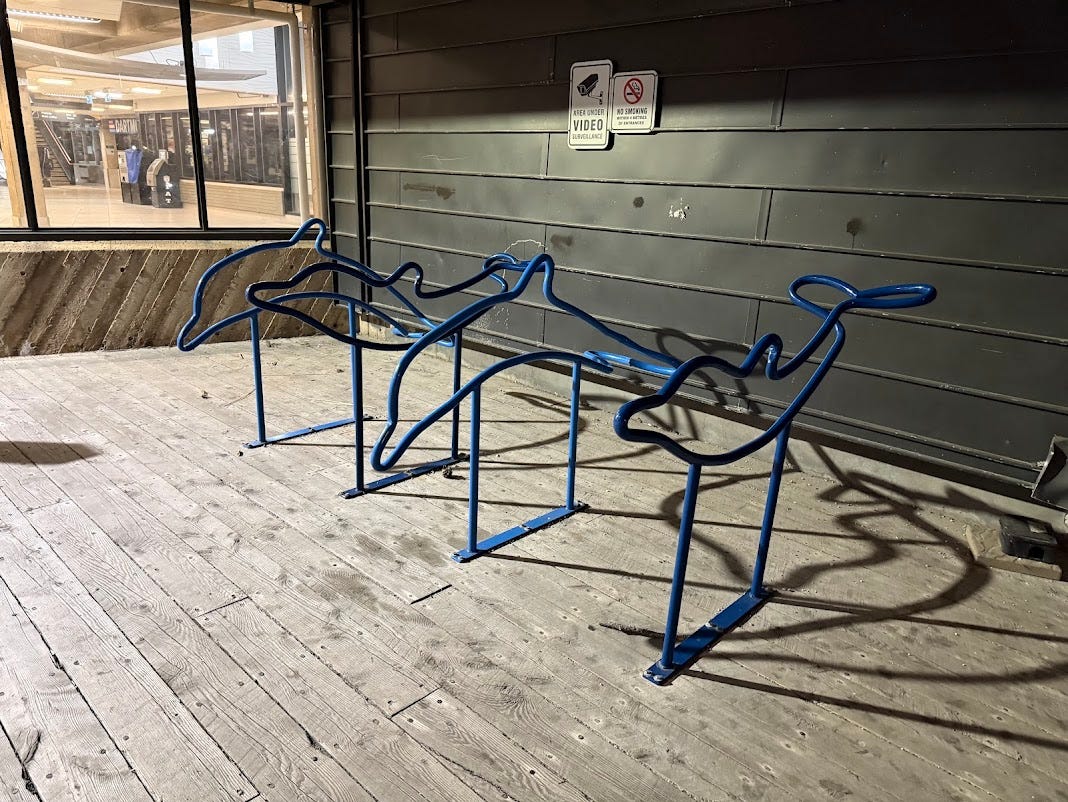
Throughout the city, I found a few maritime-themed decorative bike racks, which add practicality to the space while enhancing its visual appeal.
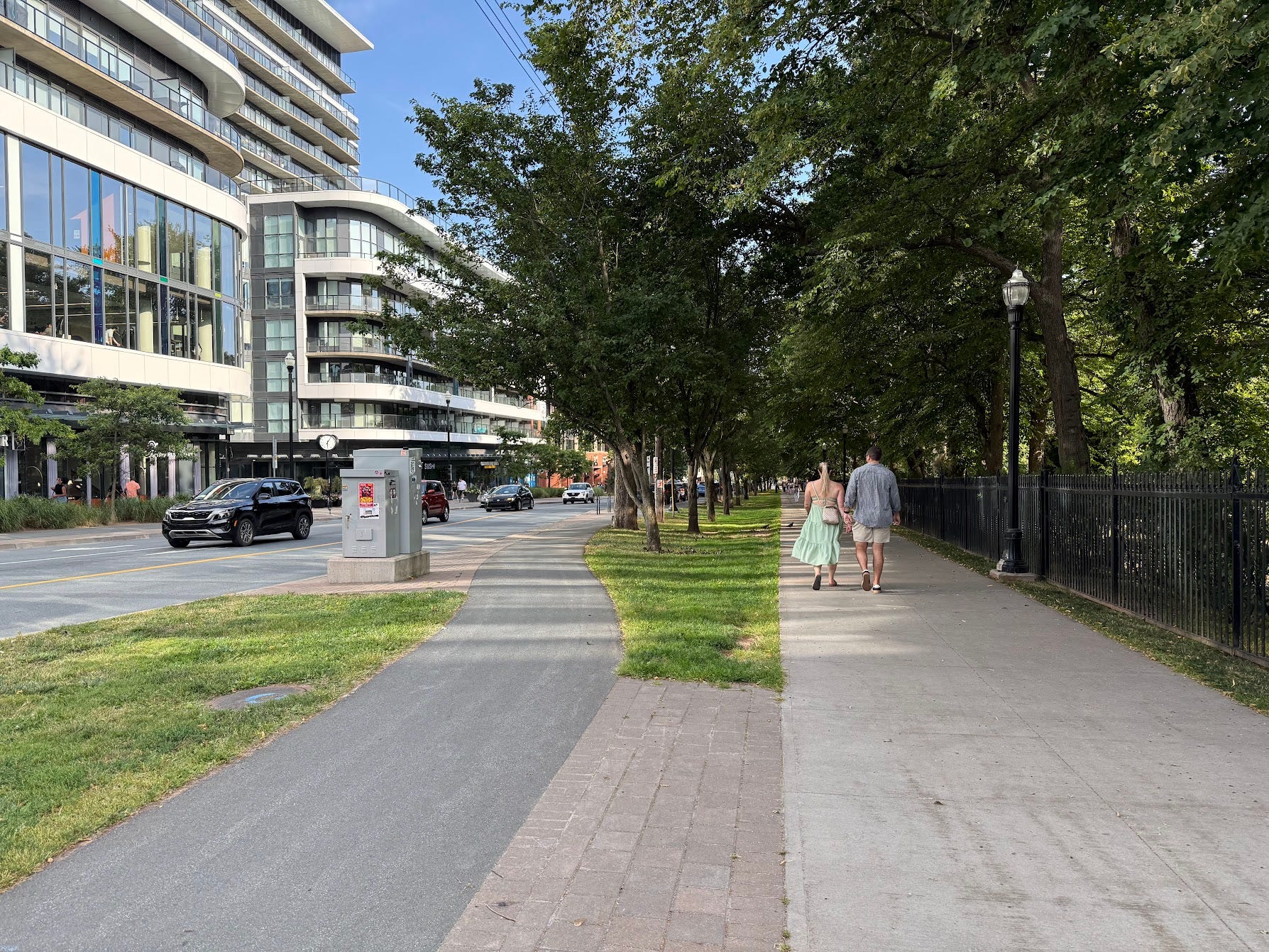
This is a bike lane separated from a wide sidewalk by some greenery next to a park, just like I saw about 2 months ago in Taiwan at Daan Park in Taipei. Infrastructure like this is ideal for all road users to get their own space and access to public parks.
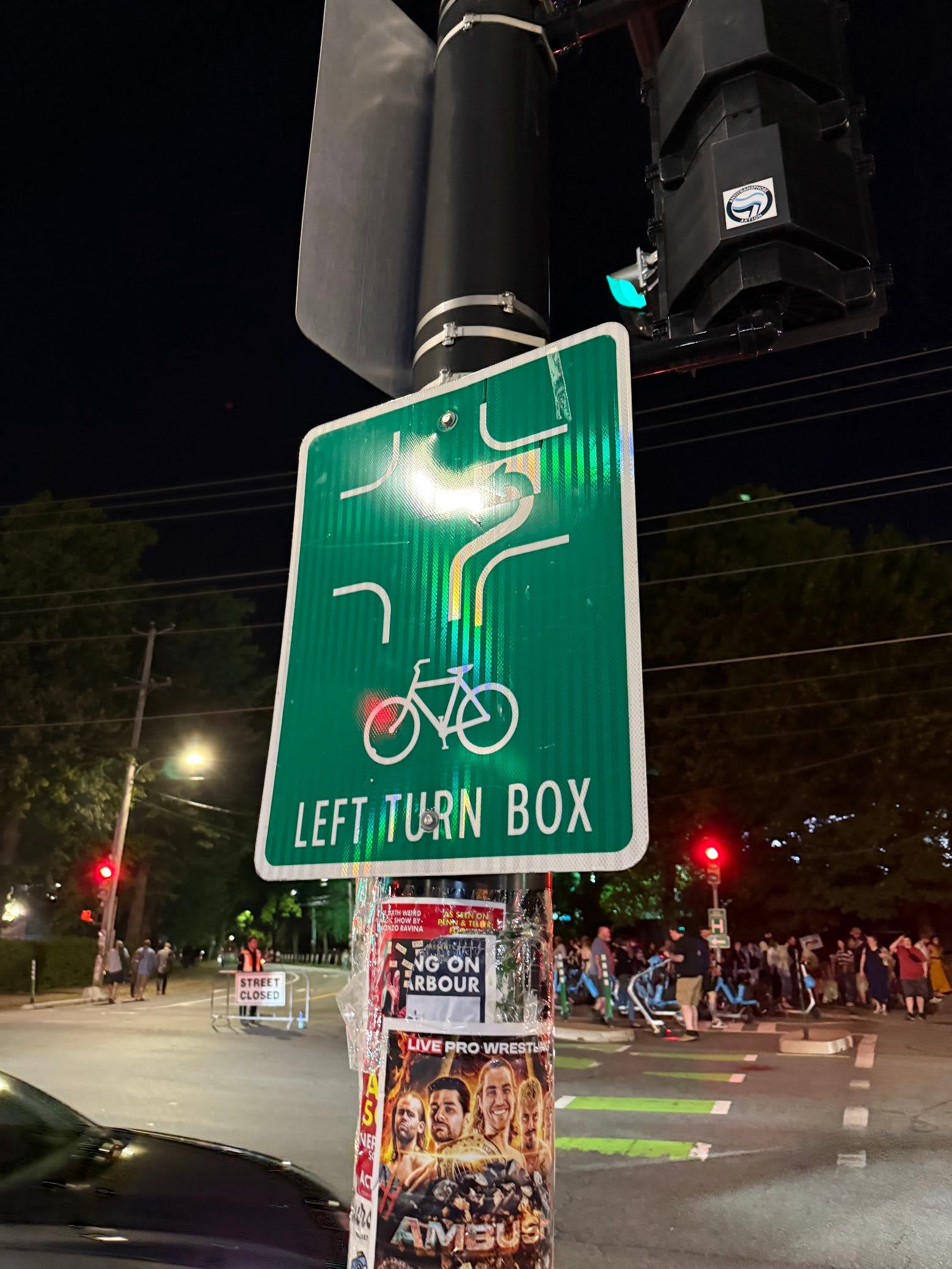
While left turn boxes are used in many cities that I have been to, including right on the University of Pittsburgh’s campus, it is excellent to see instructions on the road to see how to use them.
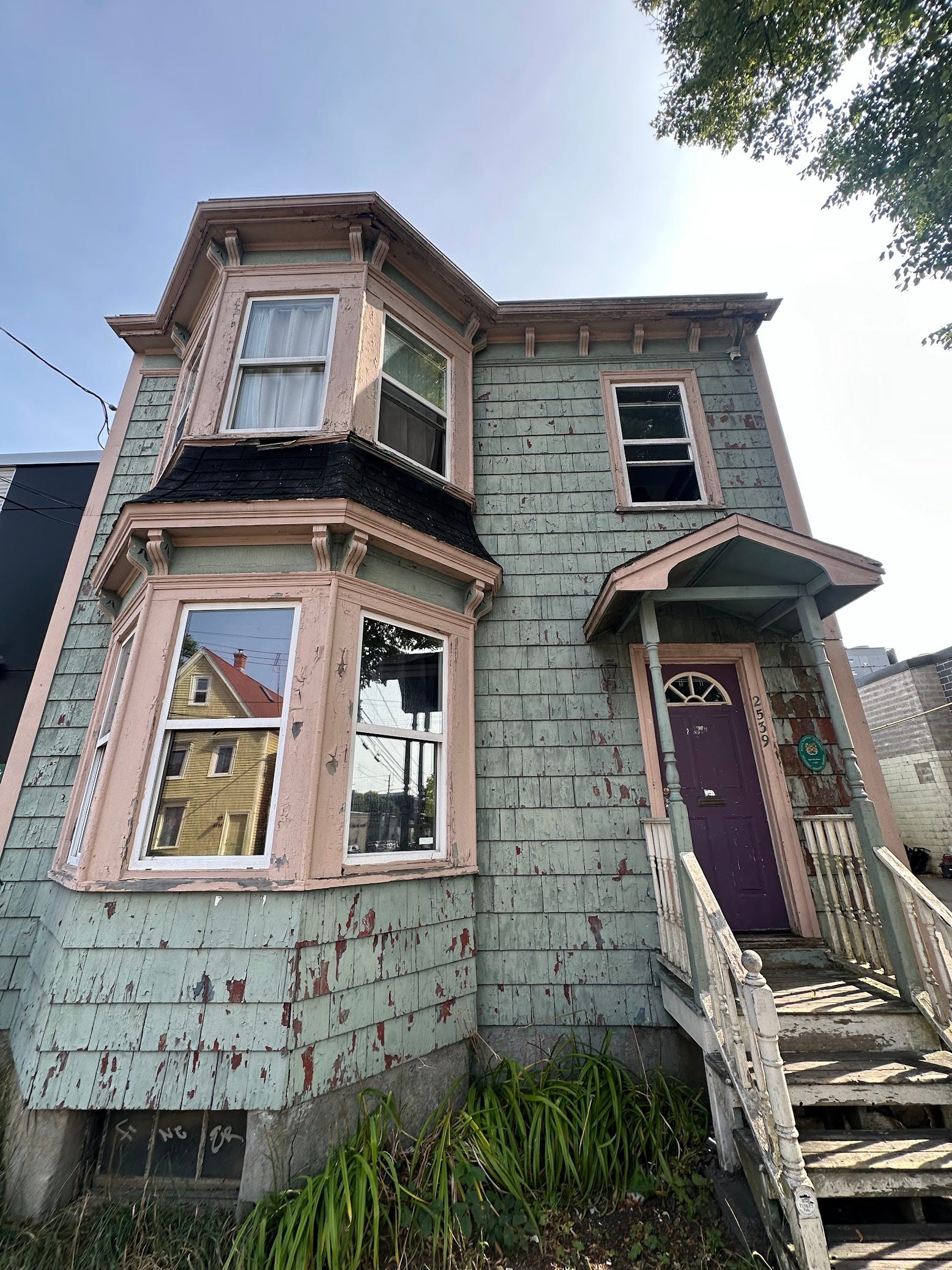
While this one is very dilapidated, much of Halifax is covered in this type of housing; a two-floor version of Boston’s triple-decker. It’s great to see dense housing in a less dense city.
Halifax looks like it could be the blueprint for other cities in North America could follow.