

Why Are Empty Buses Passing Us By?
Unlocking Pittsburgh's Hidden Transit Capacity

Last Thursday, as per usual, I took the bus to work. However, as most bus riders know, the bus often runs behind, gets crowded, or simply passes you by. I am used to that at this point, especially in Pittsburgh, where our transit funding constantly exists in a state of uncertainty. Unfortunately, while I was already running a bit late, a P1 along the East Busway at East Liberty Station, usually one of the city’s most highly ridden and reliable services, passed me by because it was too crowded. I thought, That’s okay, another will be by soon. And it was, but that one was also too full to take on passengers.
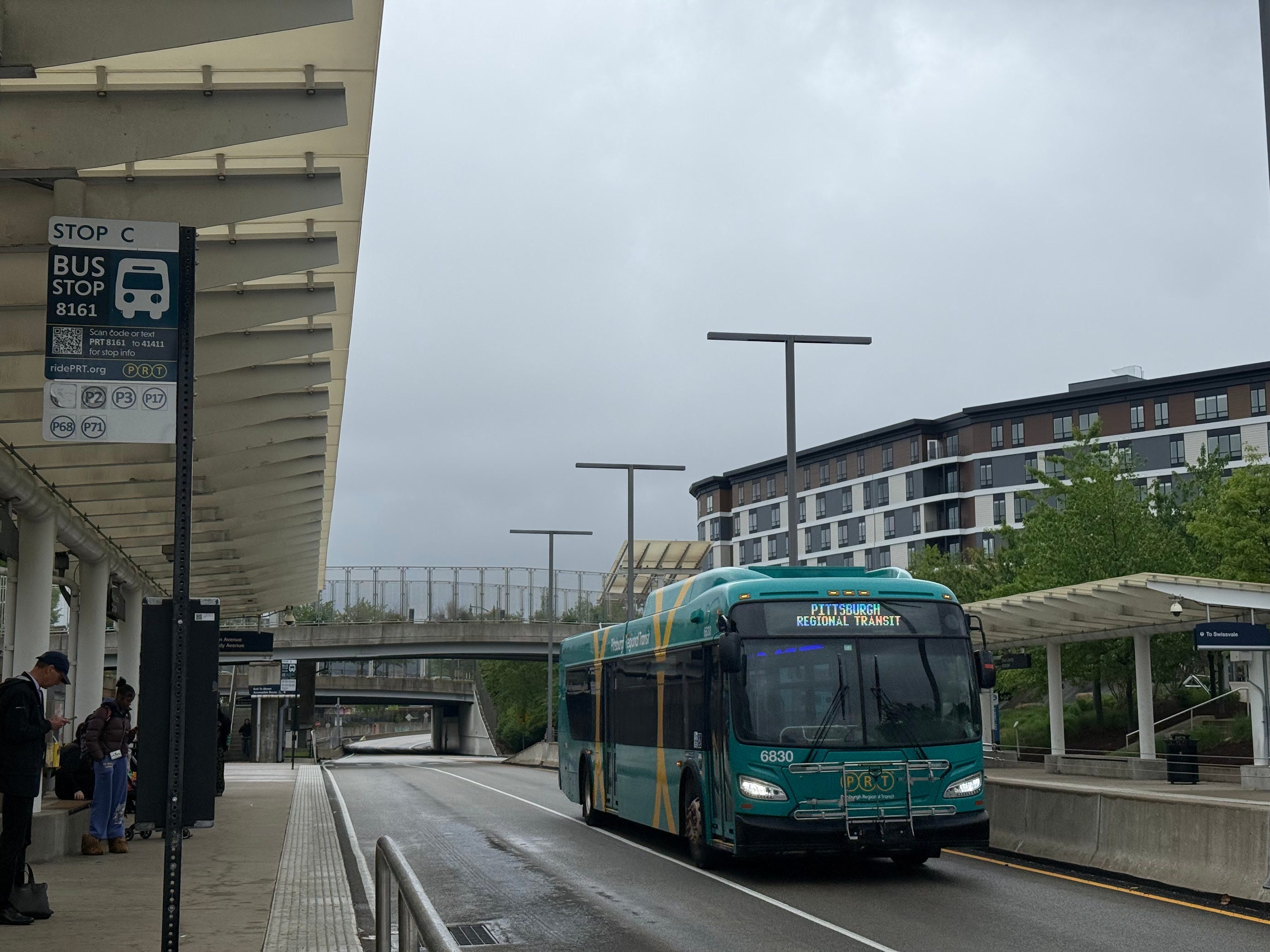
Normally, the P1 runs at 7-minute frequencies during peak hours; however, that peak essentially ends at 9:00 on the dot. By the time I commute downtown at 9:30, the actual frequency drops to 20 minutes. Last Thursday, I was left waiting 40 minutes for a bus, only for it to be so full that it could barely take on passengers at one of the most highly used stops in the city. This is not a workable solution for a so-called world-class transit system.
What made this commute even more frustrating is that, by the nature of Pittsburgh Regional Transit’s (PRT) scheduling and planning, many routes start and end service downtown. Many of these routes originate from the East Liberty Garage, making the busway a quick way for drivers to get downtown to start service and a quick way to return to the garage when coming out of service. That may seem like an unproblematic, efficient use of vehicles. But while waiting at East Liberty, I saw upwards of a dozen out-of-service buses blow past a platform full of people waiting to go to the exact same place those buses were headed. It feels incredibly wasteful.
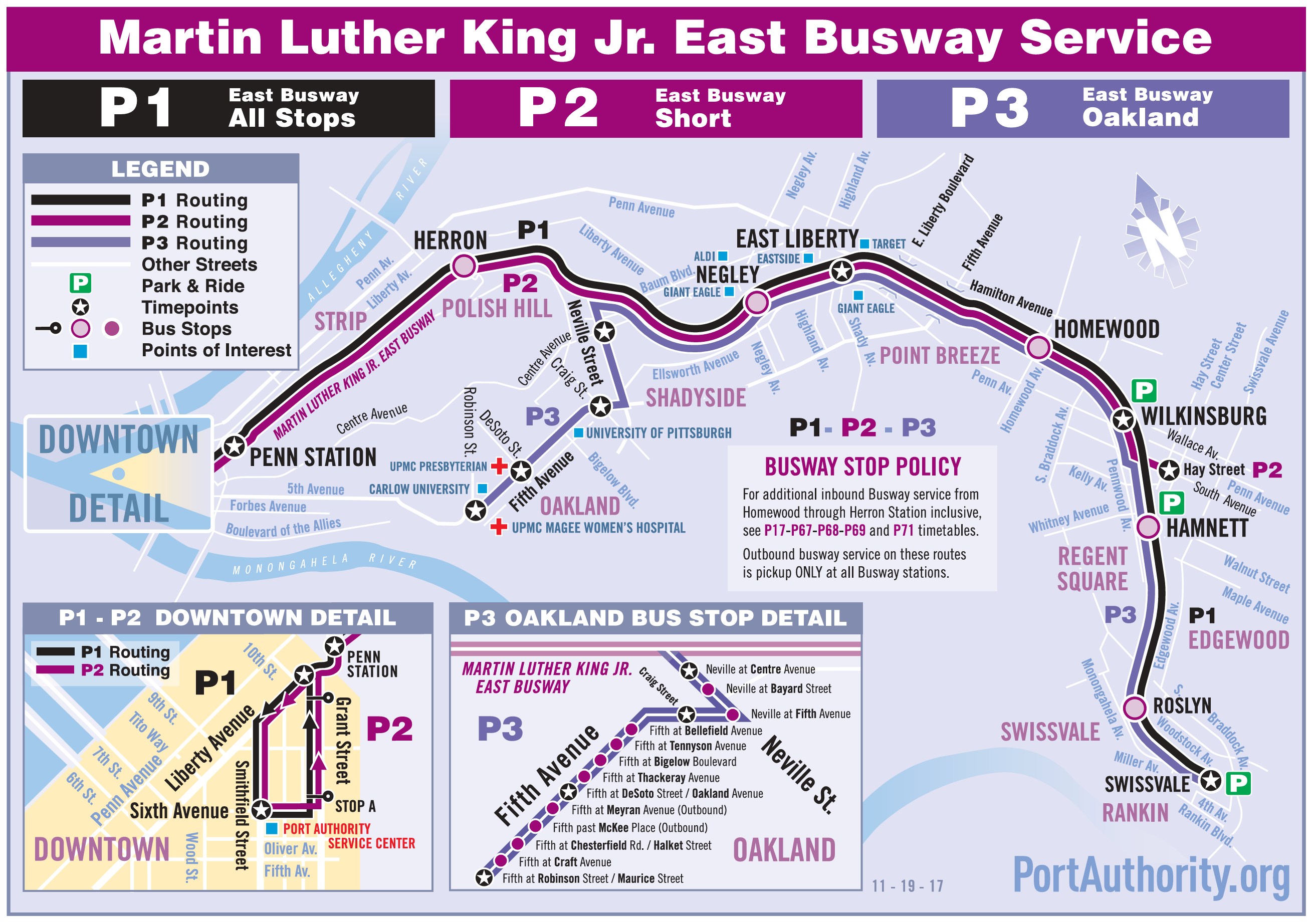
While trying to occupy myself on another such morning, I looked at the bus stop sign and noticed a small form of vandalism: a sticker had been moved from covering the P2 (an obsolete route, as it should be covered) to covering the P1. I had always assumed the P2 existed in the past but didn’t know the details, so while waiting, I looked it up. It was a bus that essentially covered service from the East Liberty Garage along the busway into Downtown. It was eventually cut as a cost-saving measure. However, I would argue that PRT, in an attempt to belt-tighten (as their CEO, Katharine Kelleman, loves to tout to the PA Legislature), must bring it back in a different form.
The old P2 was a route with dedicated buses and operators; however, because it ran in its entirety as a supplemental part of the P1, it did not make fiscal sense. Under my proposal, the route would only run as a supplemental service. The “new” P2 would simply convert existing out-of-service buses traveling along the busway into revenue-generating service. The buses are already there. The drivers are already being paid. Currently, though, these buses are running empty without collecting any fares.
There is even precedent for routes that change mid-service. For example, in Boston’s Dorchester neighborhood, two routes have termini on the UMass Boston (UMB) campus: the 8 and the 16. On some trips, an 8 will run to UMass, then turn around as a 16 to run back to Ruggles. From what I have heard, this even happens here in Pittsburgh with the 75; it sometimes enters service from the garage as a 75S so that it isn’t running without revenue.
The main complication I see with such a change is figuring out where the bus changes routes downtown. Unlike the 75/75S or the UMass campus routes, buses in Downtown Pittsburgh do not turn around at a specific intersection or stop. Instead, they turn around using the newly built Bus Rapid Transit loops, making it difficult to pin down a specific place to change route signs. My best solution is for these buses to make a single downtown stop as the P2, perhaps on Grant St at the US Steel Tower, before continuing on their scheduled route to the appropriate downtown loop. This would give P2 riders a known place to disembark while allowing them to use a more convenient stop if the secondary route permits.
Another issue that could be raised is that some of these out-of-service buses are actually driving to Oakland. However, I consider that more of an opportunity than a problem. These buses could run as a P3S or P4, operating strictly between Oakland and East Liberty. While the frequencies would not be high or perfectly consistent, they would add some much-needed extra service along the corridor. It could even serve as the only P3 service on weekends—without adding a single dollar to PRT’s operating costs.
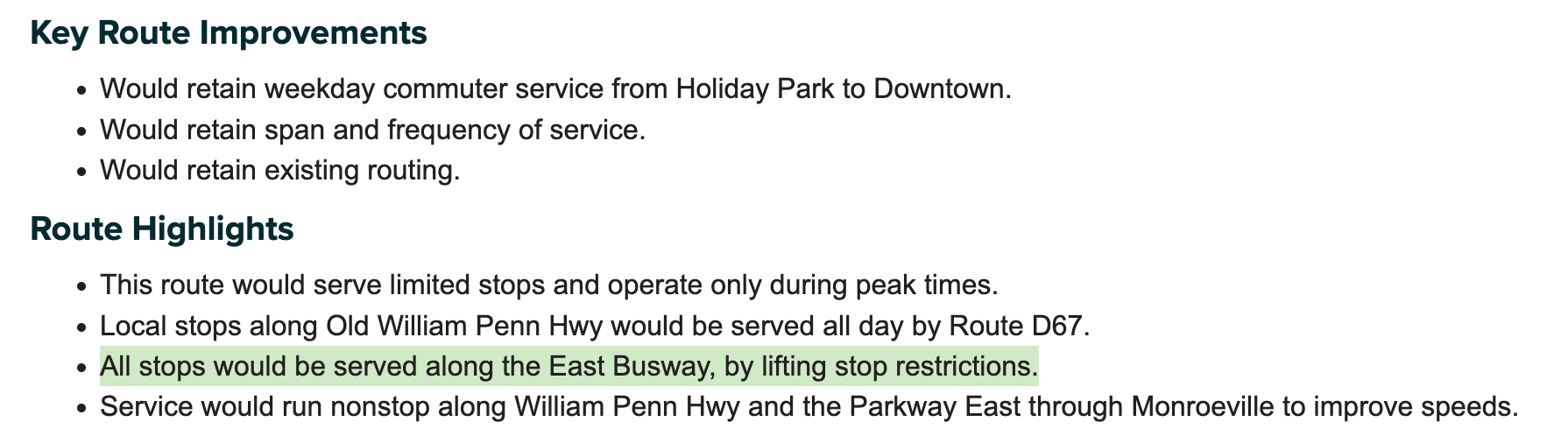
Thankfully, PRT is already taking some action toward this concept through their Bus Line Refresh by adjusting service along the flyer routes. Currently, many express flyers on the busway have stop restrictions. Seeing almost-empty buses pass full platforms without stopping only adds to passenger frustration. PRT is set to lift these stop restrictions (and remove service for some flyers) through the refresh, adding more cost-neutral service to the agency’s greatest asset. I am simply asking for these efforts to be pushed further. The P2 would never be a full replacement for the current level of P1 service, nor would the P3S/P4 replace the P3; however, they could provide some much-needed relief for inner-city commuters.
This is a great idea, Jacob! In Minneapolis blue line trains do the same thing when entering service, running as short trips from the garage near cedar riverside station to downtown before starting their regular routes to avoid long deadheads, though they don't use a separate route name.